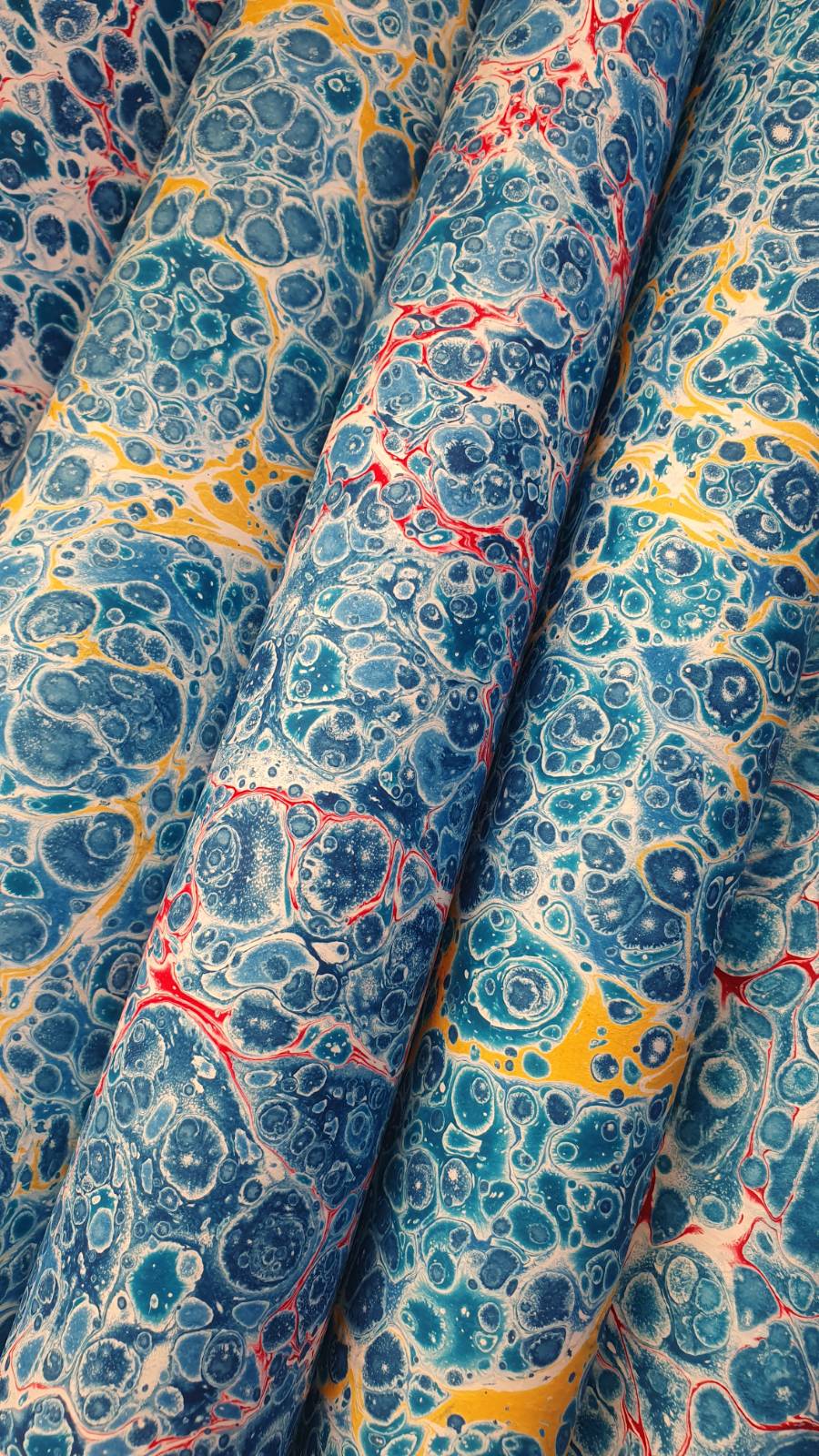
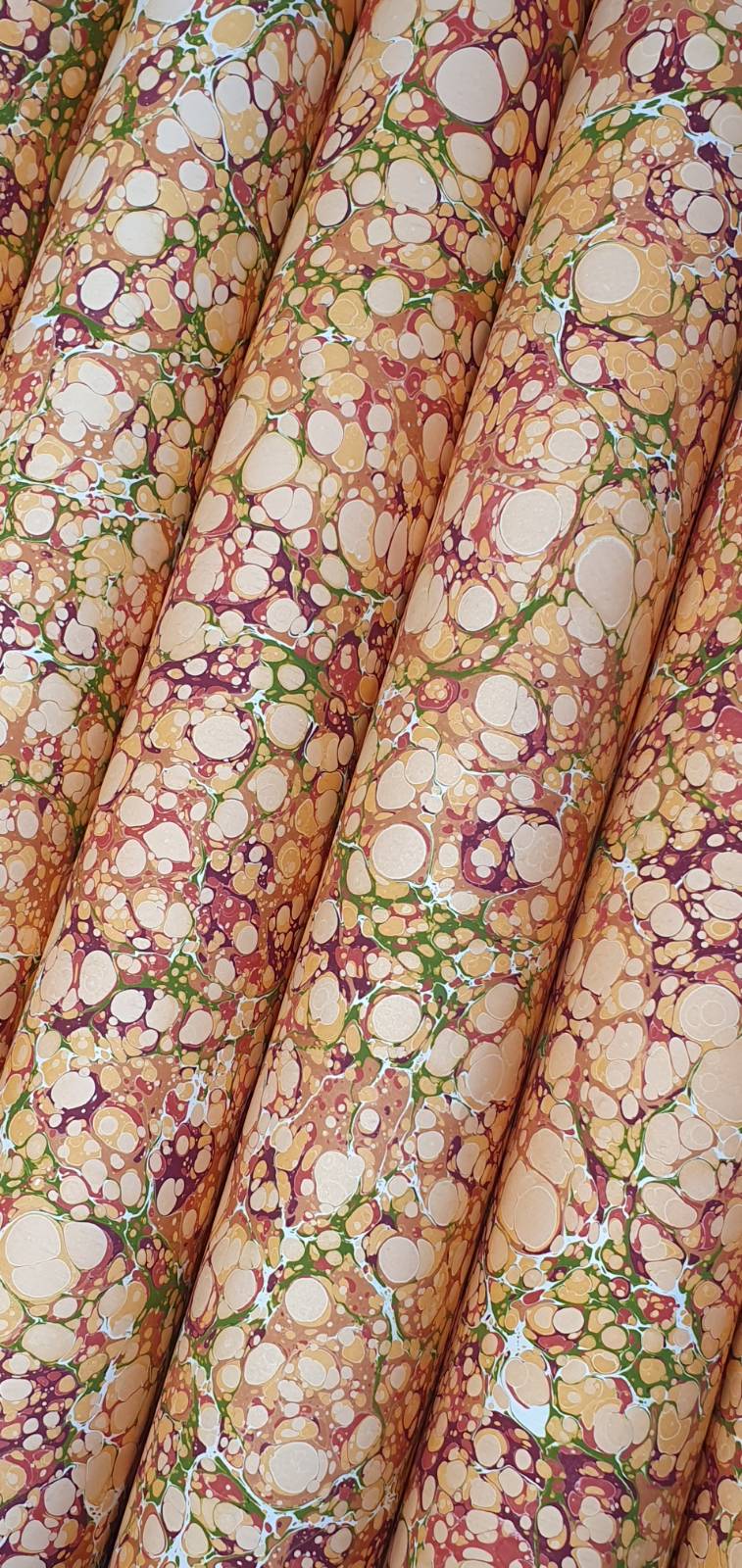
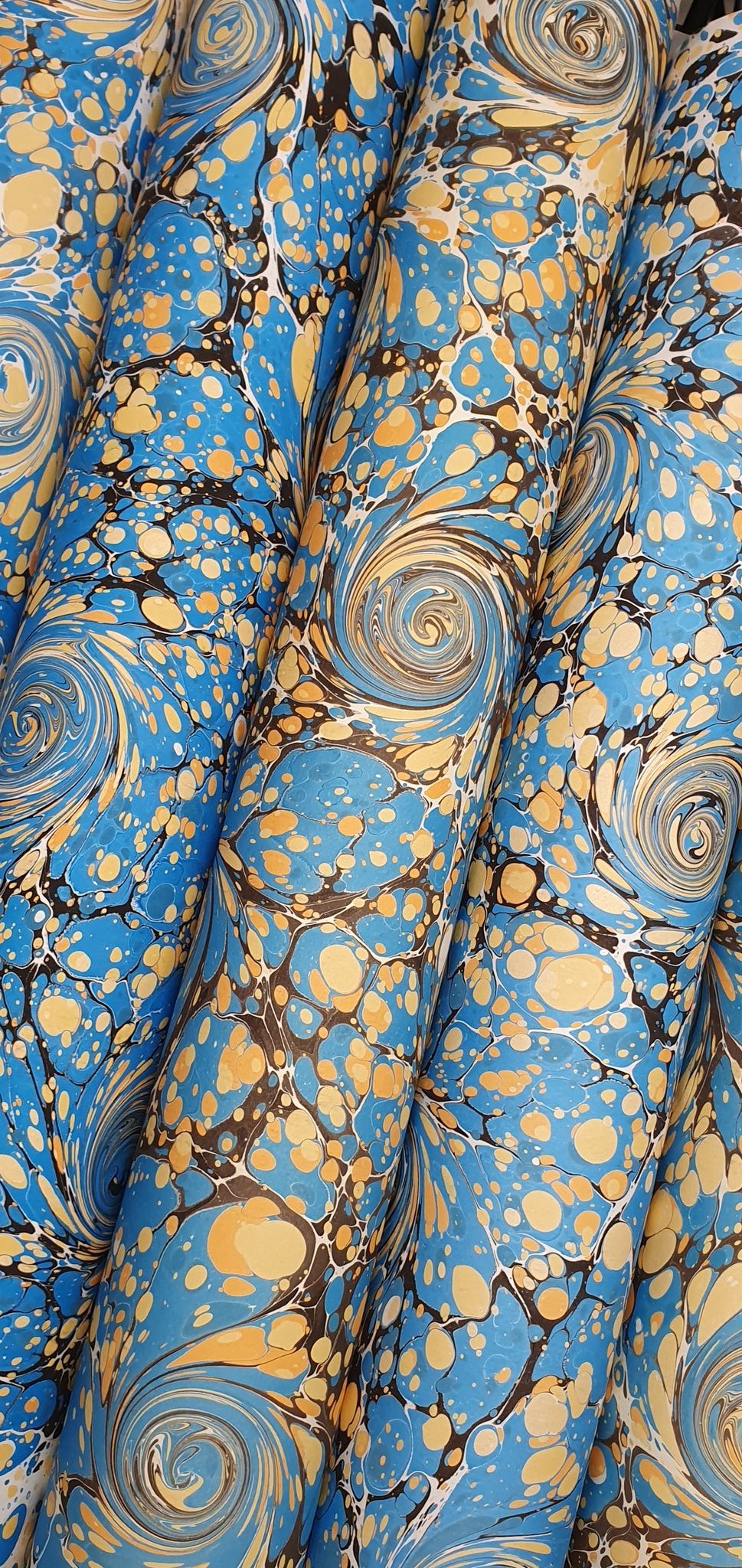
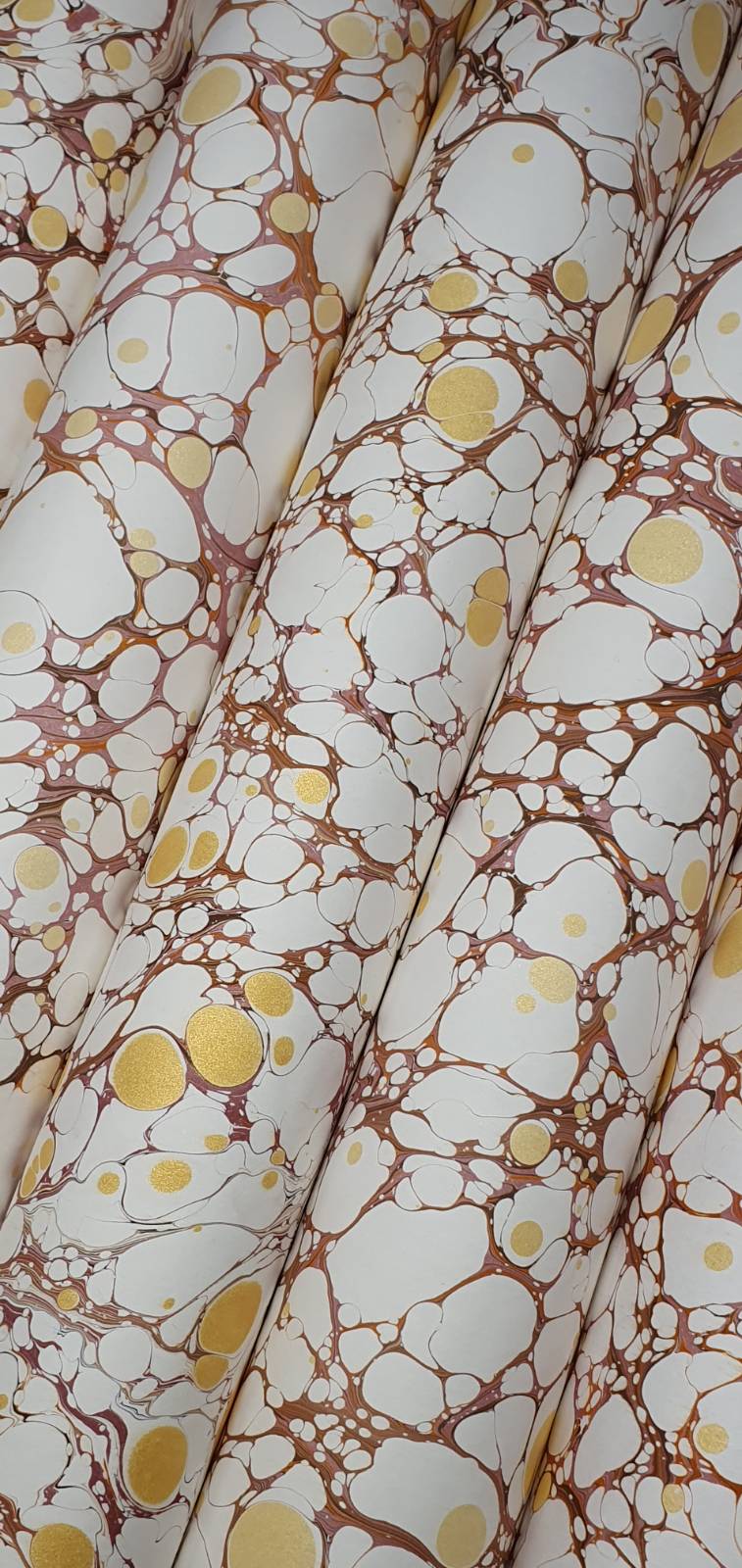
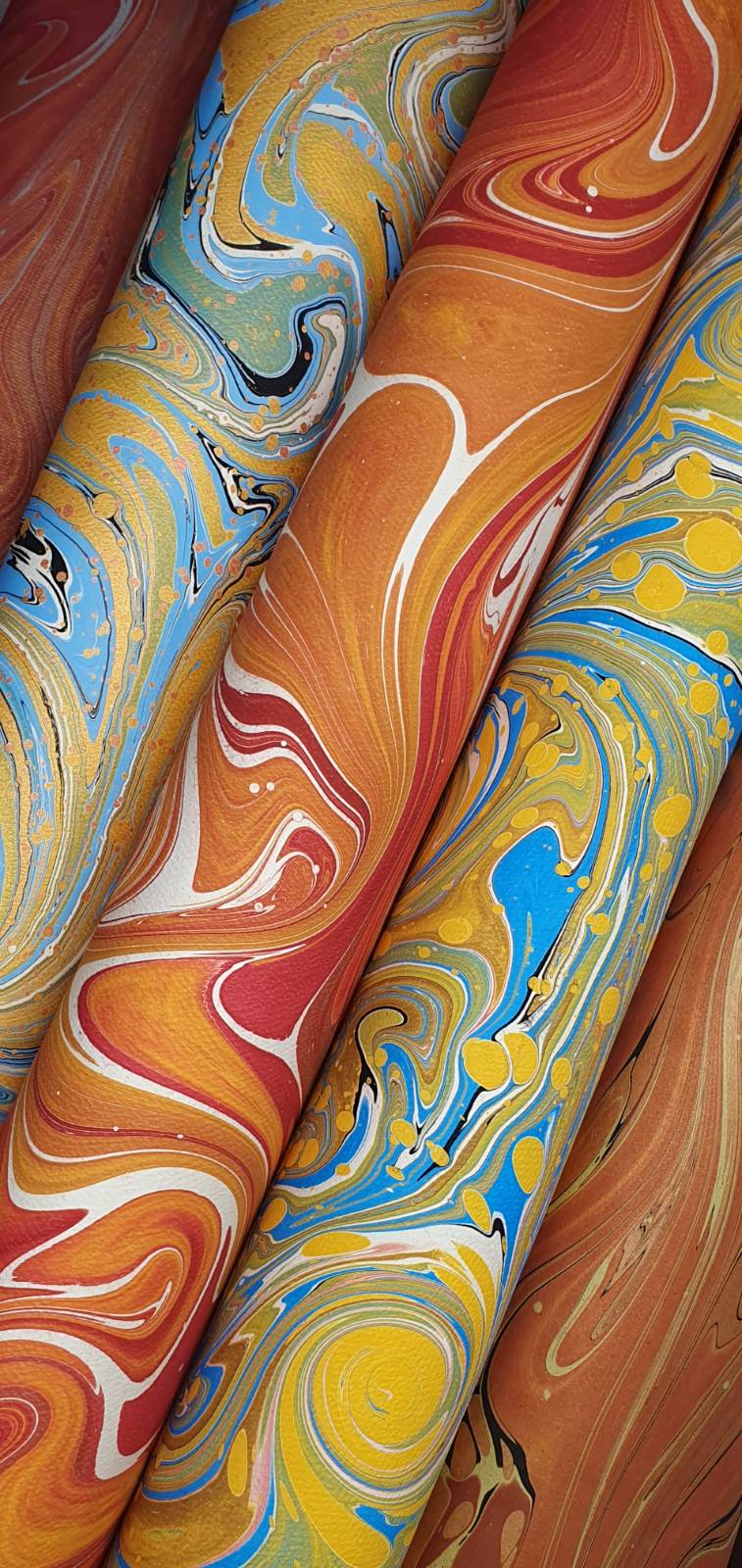
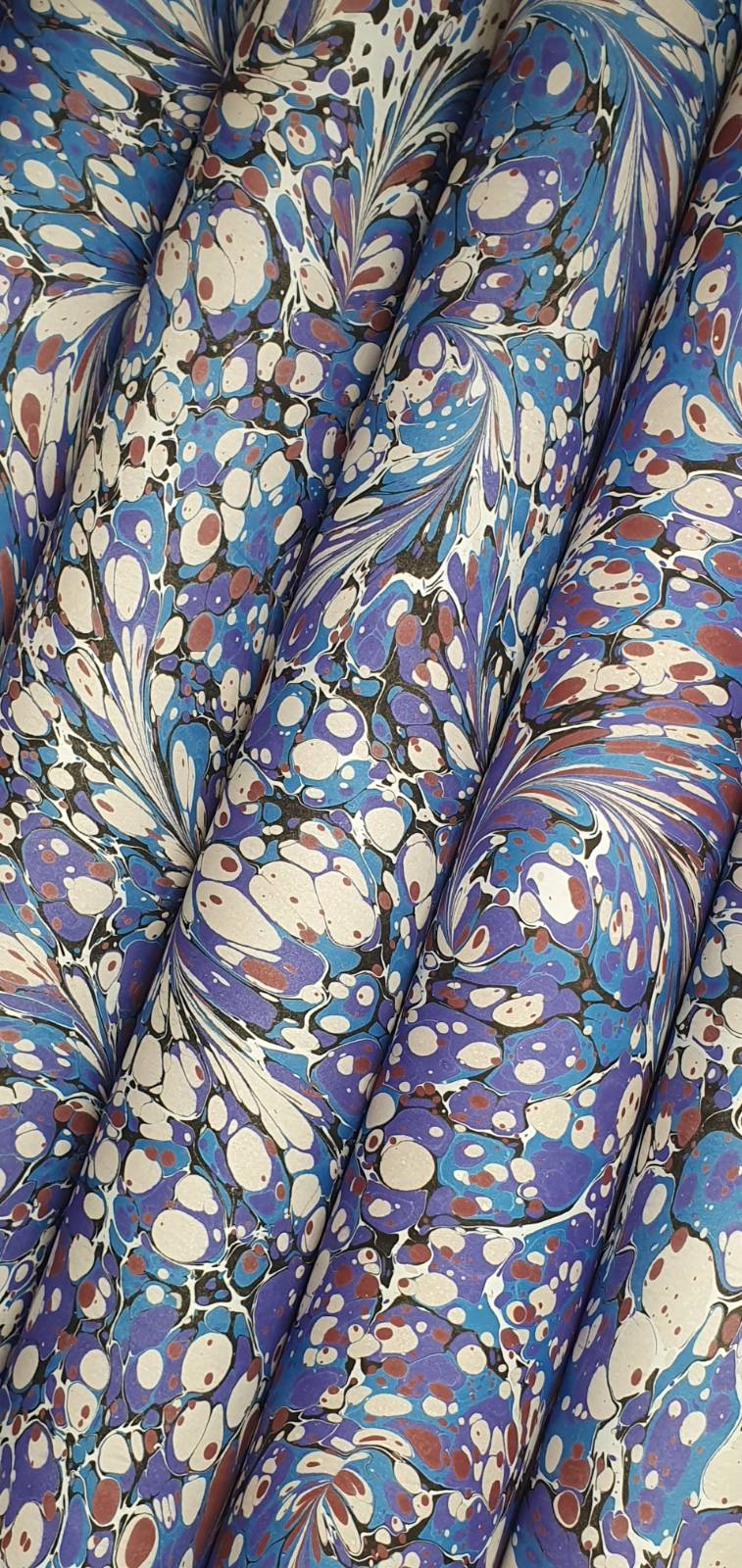
Paper Marbling - The First Book in Poland.
Marbling Comes to Poland
What is Marbling?
Marbling is an ancient technique where paints float on a thickened water surface, creating organic patterns. The key challenge: the water must be specially treated with thickeners so pigments don't sink. This requires knowledge of chemistry, patience, and practice.
Polish literature on marbling has been nearly nonexistent. A 1948 reference by Aleksander Semkowicz expressed hope that someday the craft would be revived in Poland. That day has come.
Josef Halfer: A New Era
Josef Halfer was a bookbinder with an insatiable curiosity about chemistry. He spent decades experimenting with pigments, thickening agents, and techniques. Most importantly, he pioneered the use of carrageenan (seaweed extract) as a thickener—a breakthrough that made marbling more accessible.
His methods are now known as the "Halferian method" in European marbling circles. His student, Franz Weisse, continued the tradition.
How This Book Will Be Made
Each copy is bound in a unique hand-marbled pattern. Inside, there are 27 empty slots where readers can insert their own marbled papers—creating a personalized, growing collection.
This approach was inspired by limited-edition publications from Oak Knoll Press that include genuine marbled paper inserts.
Why This Book Matters Today
While traditional purists use:
- Gum tragacanth — the historical Turkish (ebru) method
- Irish moss / carrageenan — the Western method popularized by Halfer
This modern edition includes an appendix for contemporary marblers using:
- Food-grade thickeners (E-number additives available in supermarkets)
- Modern art-store gouache paints
- Tips for beginners — enabling anyone to start marbling for approximately 100 PLN
A historic craft, made practical for the 21st century.