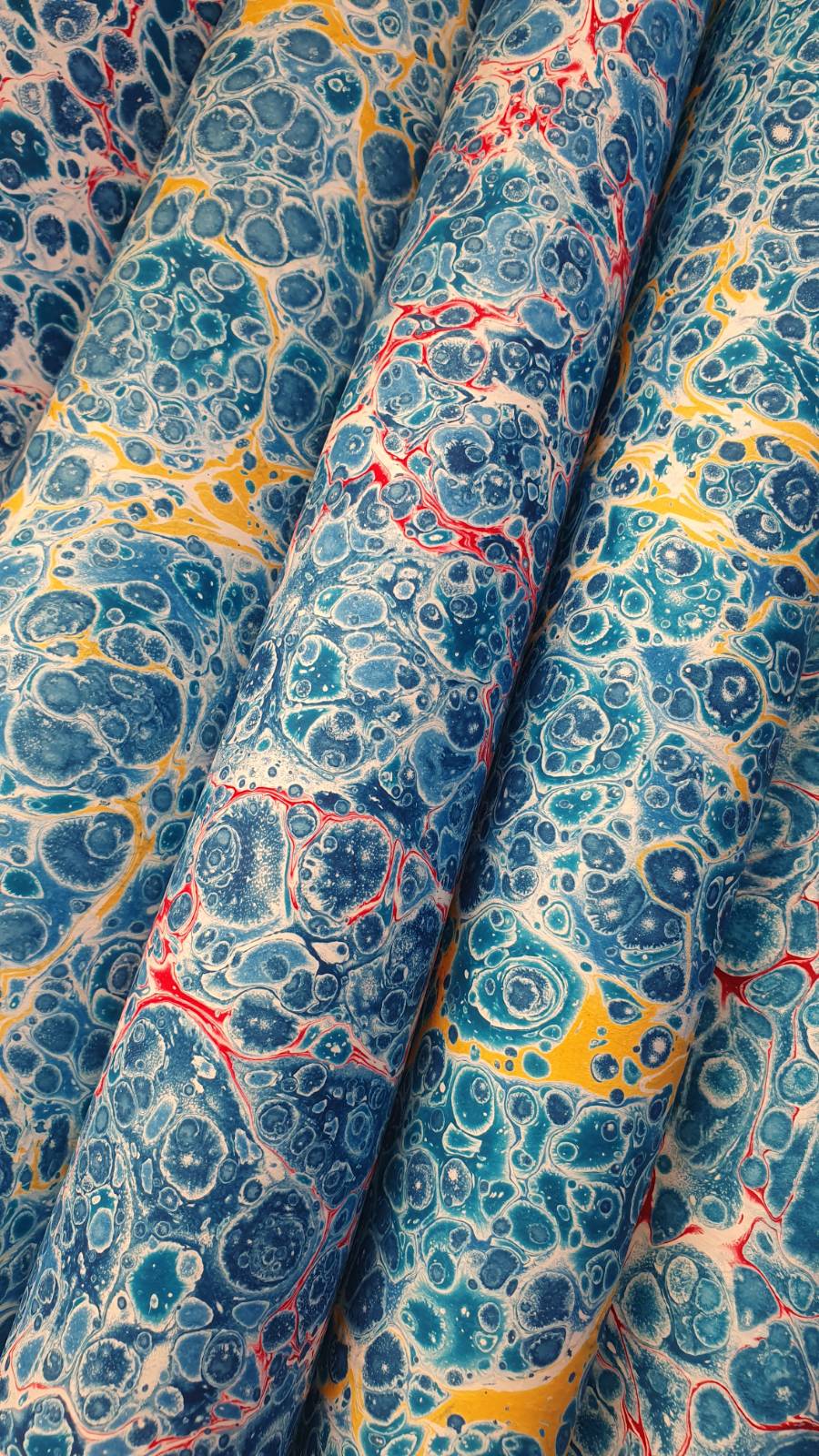
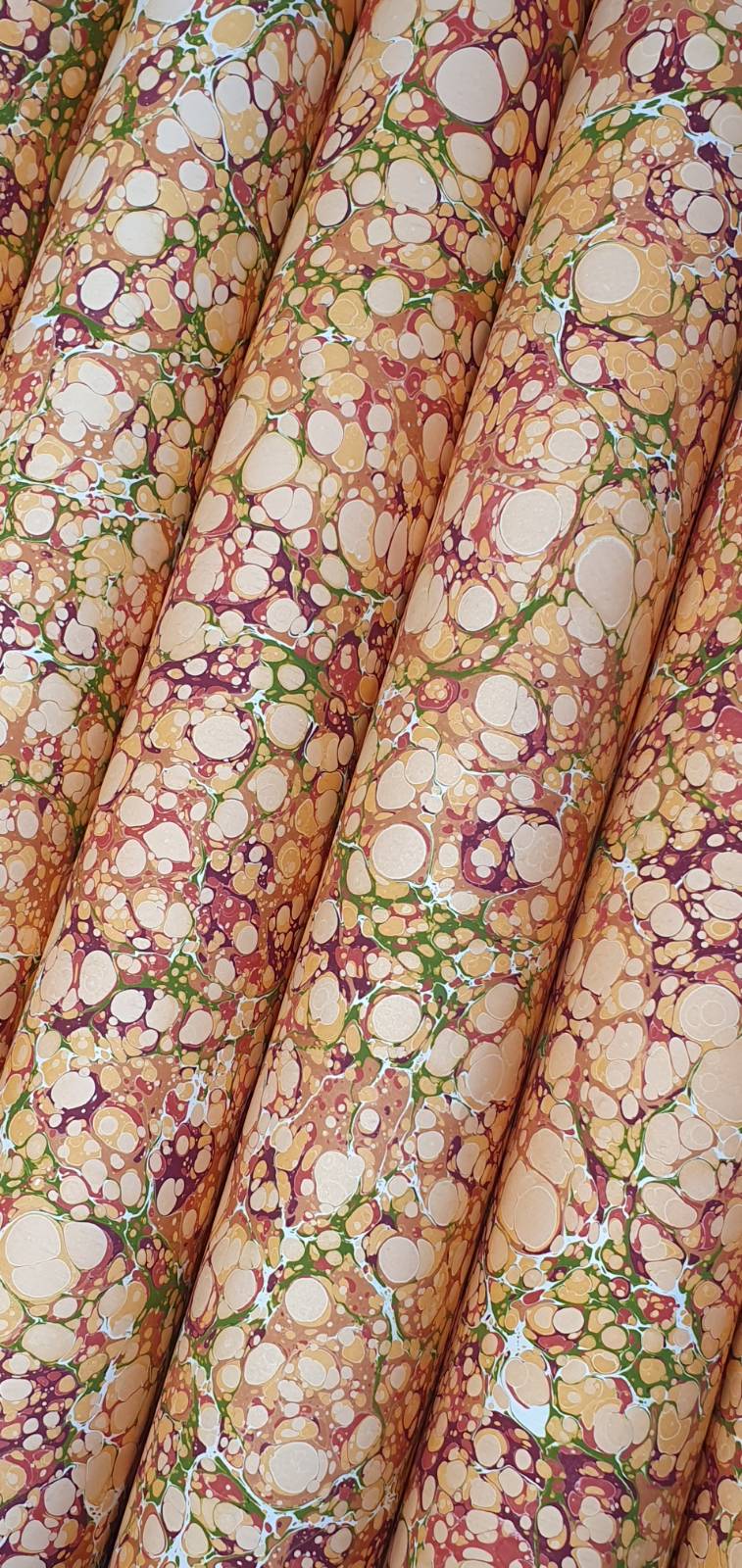
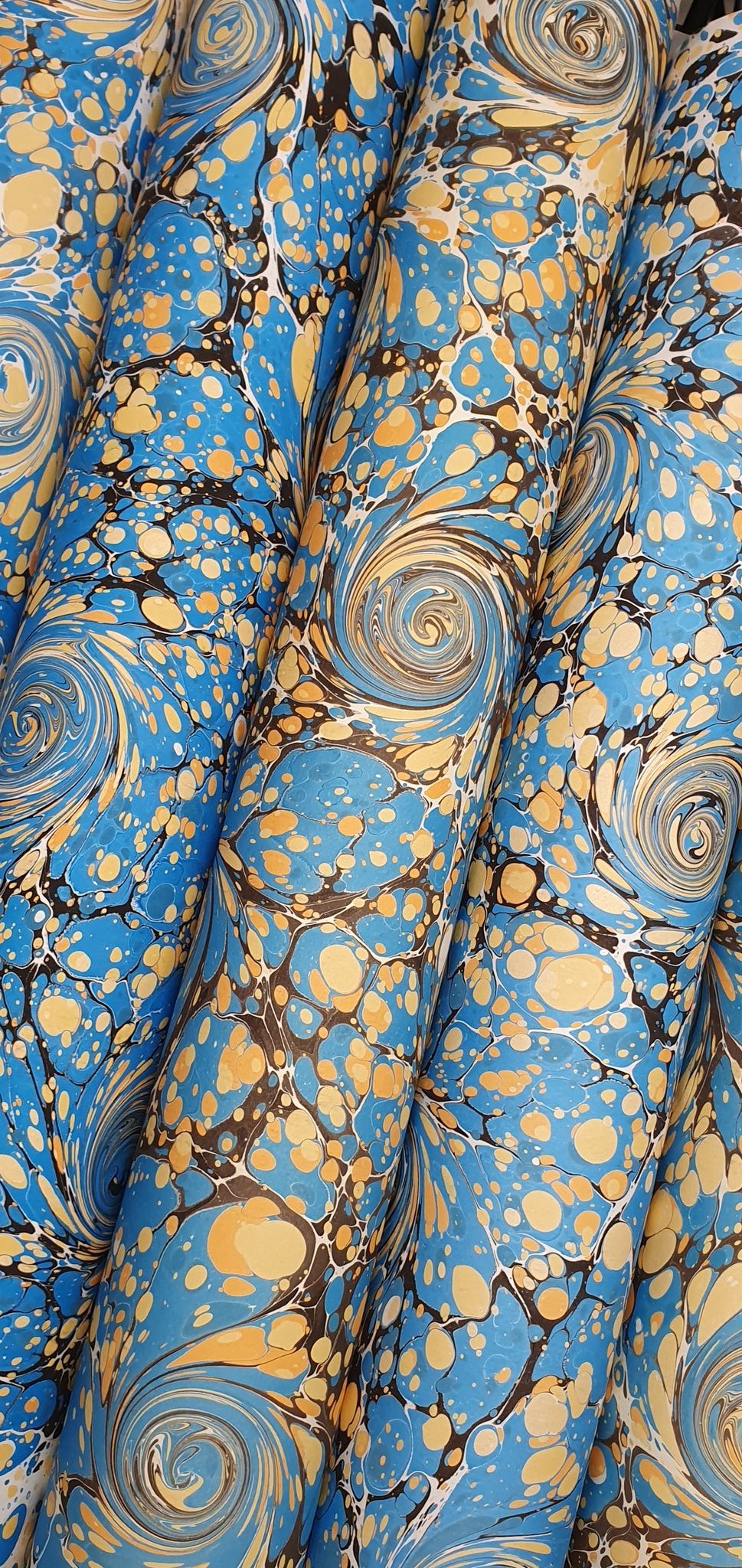
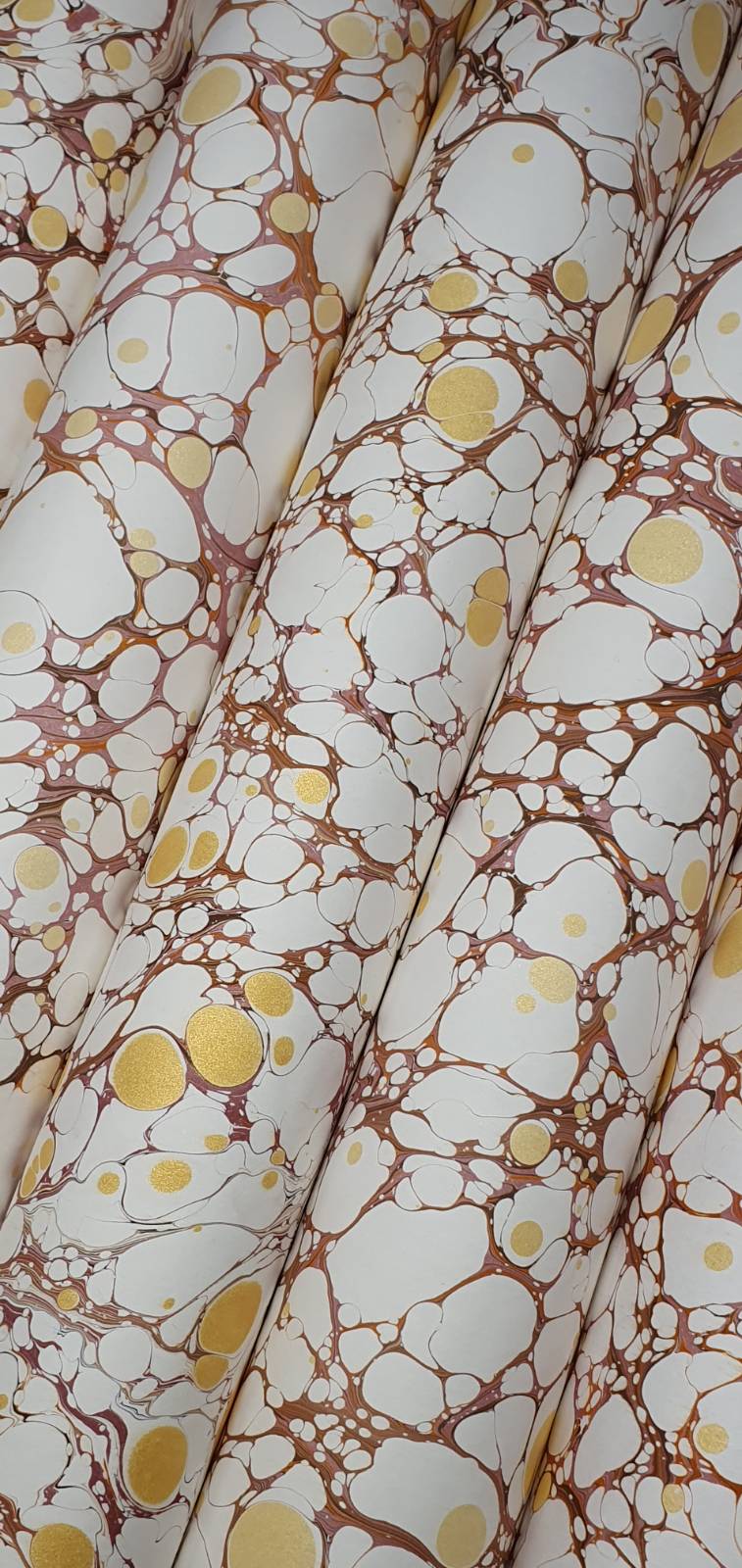
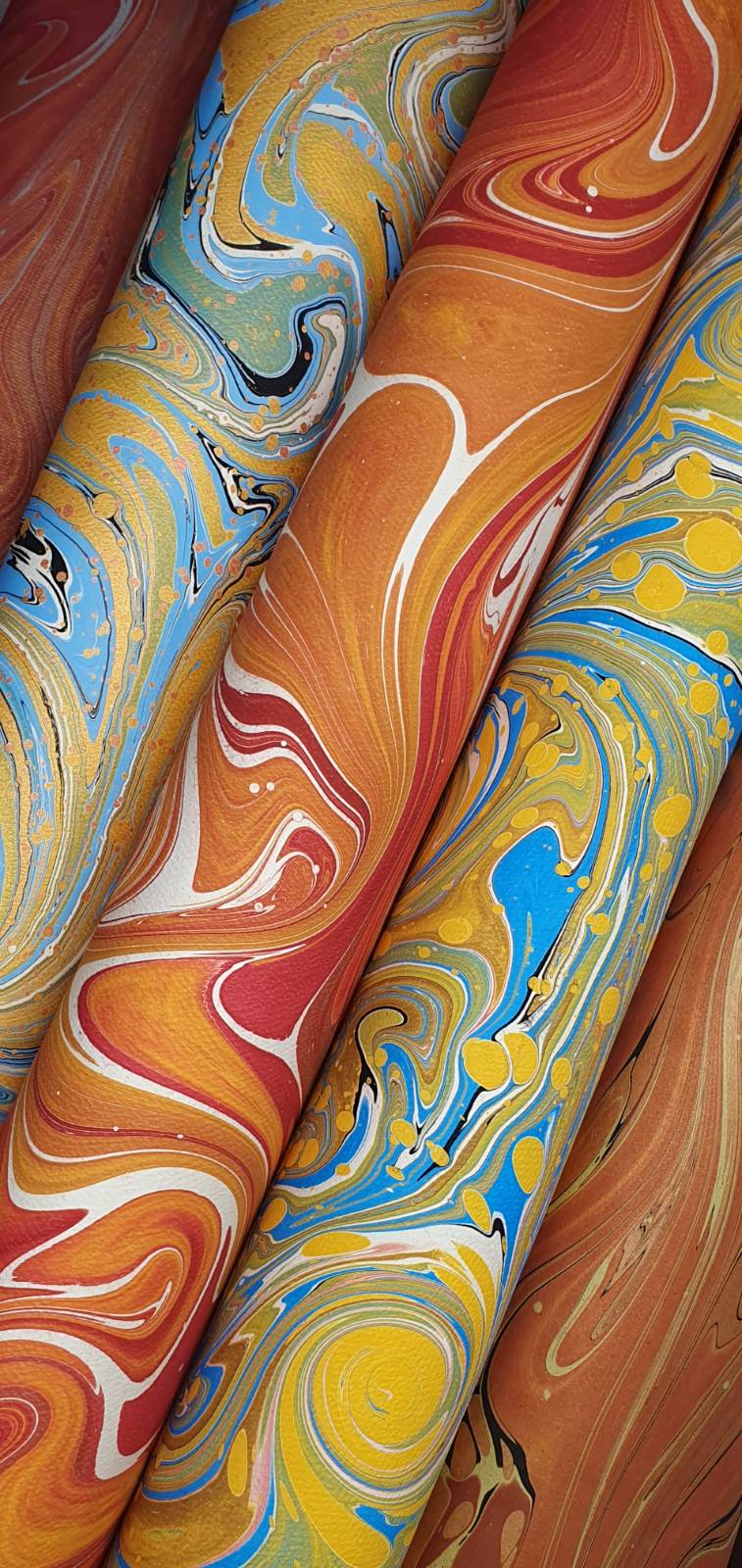
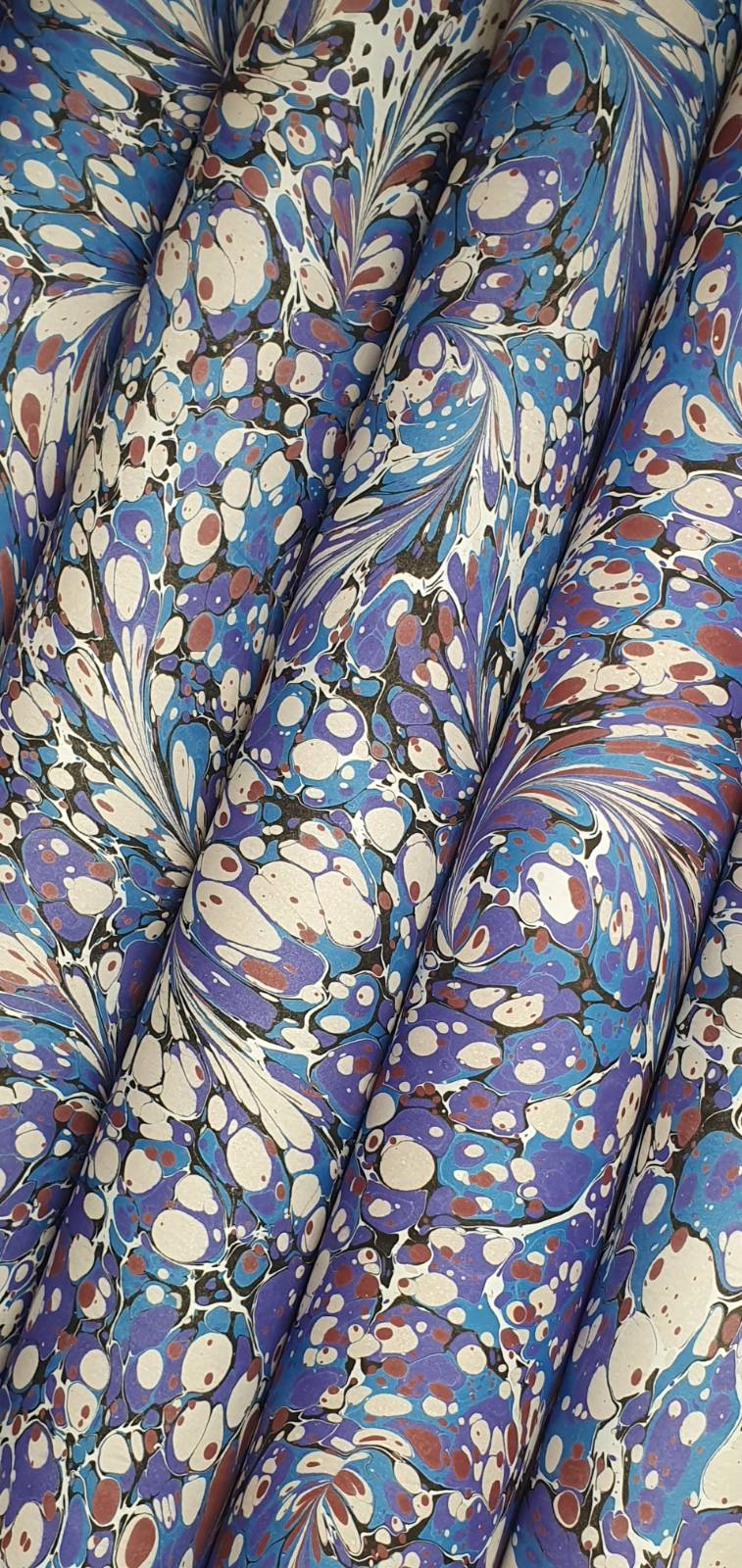
Paper Marbling - How to Make Beautiful Marbled Paper.
Adam Piskorek
A Beginner's Guide to Paper Marbling
This is a step-by-step guide to creating marbled papers using the ebru method. The goal is accessibility—you can start marbling for under 100 PLN with materials from ordinary art supply stores.
Shopping & Supplies
You'll need:
- Sodium alginate (E401) — food thickener, available at health food or online shops
- Demineralized or soft water — distilled or rain water works
- Ox gall (żółć wołowa) — a surfactant that helps paint float; available through bookbinding suppliers
- Gouache paints — Winsor & Newton or Talens brands work well
- Tray — approximately A4 size (21×30 cm), about 3-5 cm deep
- Paper — minimum 80 g/m² weight; newsprint or watercolor paper
- Stylus or toothpick — for drawing patterns
- Pasteur pipettes — for applying drops of ox gall to paint
- Optional: fan brushes, wooden combs, bamboo sticks for pattern tools
Preparing the Solution
- Measure 0.7–0.8% sodium alginate concentration
- For 500 ml water: add 7 grams of sodium alginate powder
- Blend the mixture thoroughly (high-speed blender works well)
- Let it rest overnight — this is crucial; the solution thickens as it hydrates
Preparing the Paints
- Mix gouache paint with equal parts water
- Add 1 drop of ox gall per small spoonful of paint — this reduces surface tension so paint floats
- Test on a small tray before committing to your large workspace
- Observe how the paint spreads:
- Too much ox gall → paint spreads too far and becomes pale
- Too little → paint sinks or stays clumped
- Adjust the balance until paint spreads evenly across the solution surface
The Marbling Process
- Fill your tray with prepared solution
- Apply paint by splattering, dropping, or using brushes — the solution holds it on the surface
- Draw patterns with your stylus or combs — marble, comb, feather, or freehand designs
- Carefully lay paper onto the surface, starting at one corner and slowly rolling it down to avoid trapping air bubbles
- Lift the paper at a 45° angle from one corner
- Rinse under cool water and lay flat to dry under a light weight or press
Common Troubleshooting
- Paint sinks immediately → increase ox gall or use inorganic pigments (earth tones)
- Paint spreads too much → reduce ox gall or thicken your solution
- Snowflake patterns appear → solution is too cold or has absorbed too much moisture
- Smearing or bleeding → you're handling the paper too much after laying it down
Next Steps
- Join online marbling communities and forums
- Keep practicing—each attempt teaches you about pigment behavior
- Explore books on marbling history and advanced techniques
- Build your pattern library