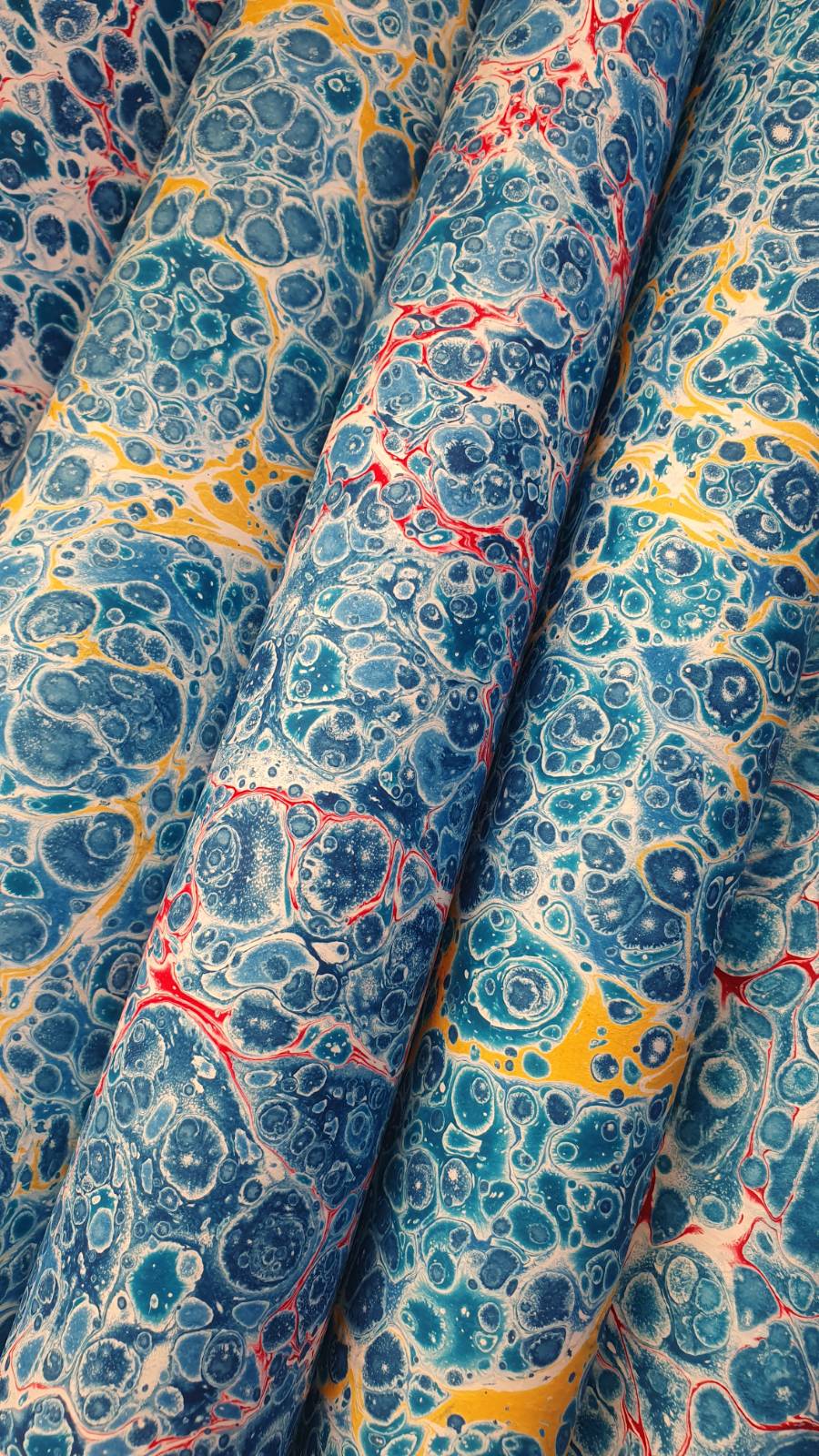
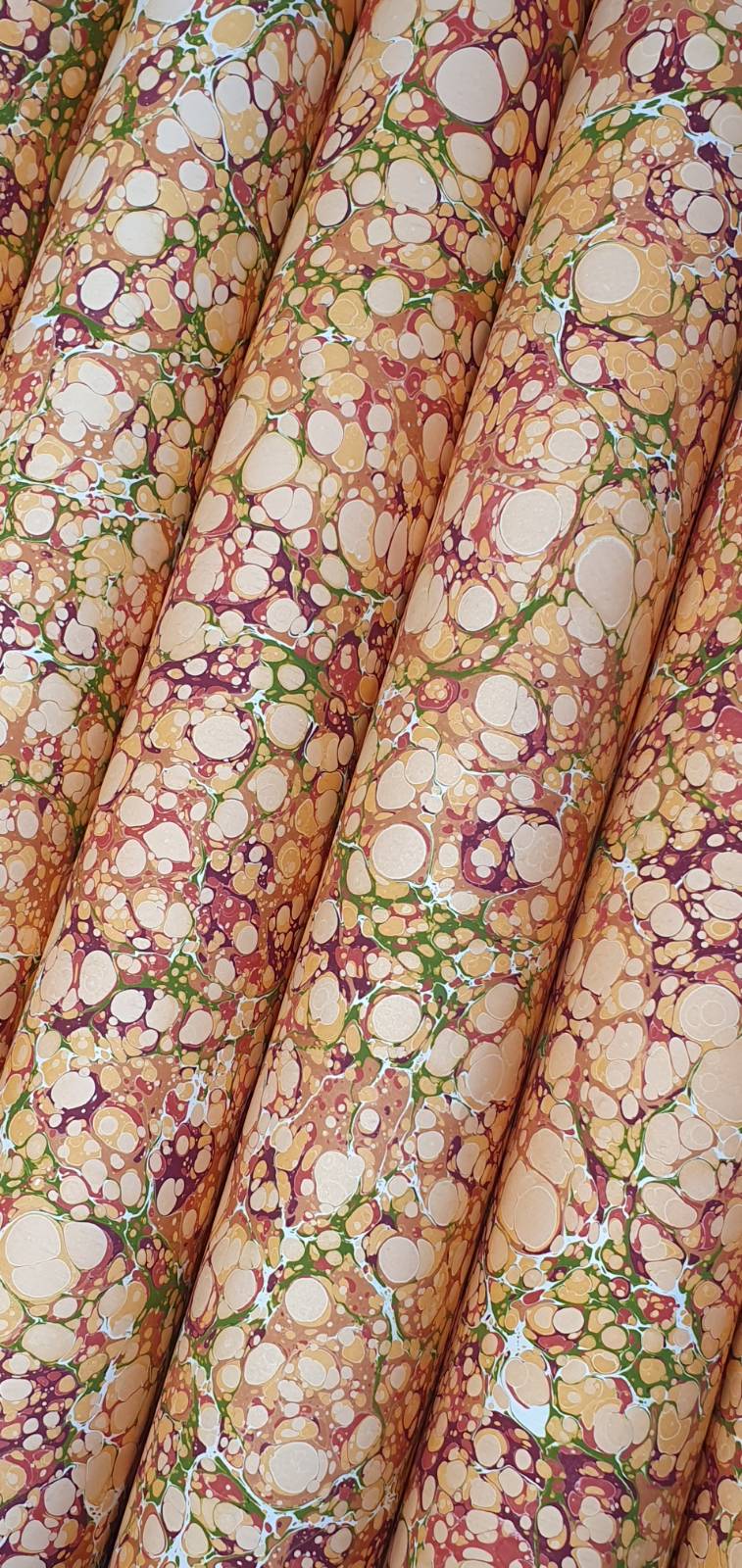
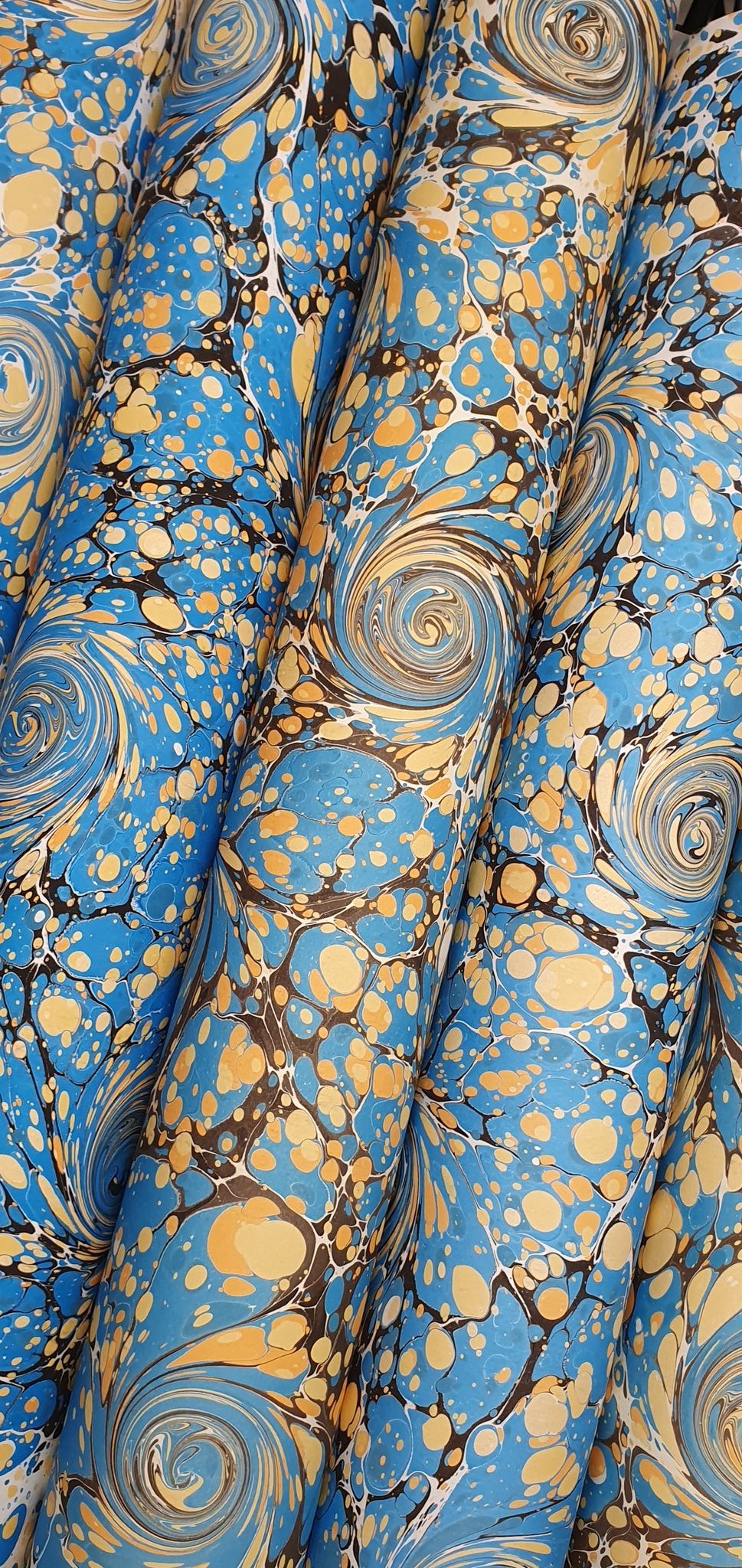
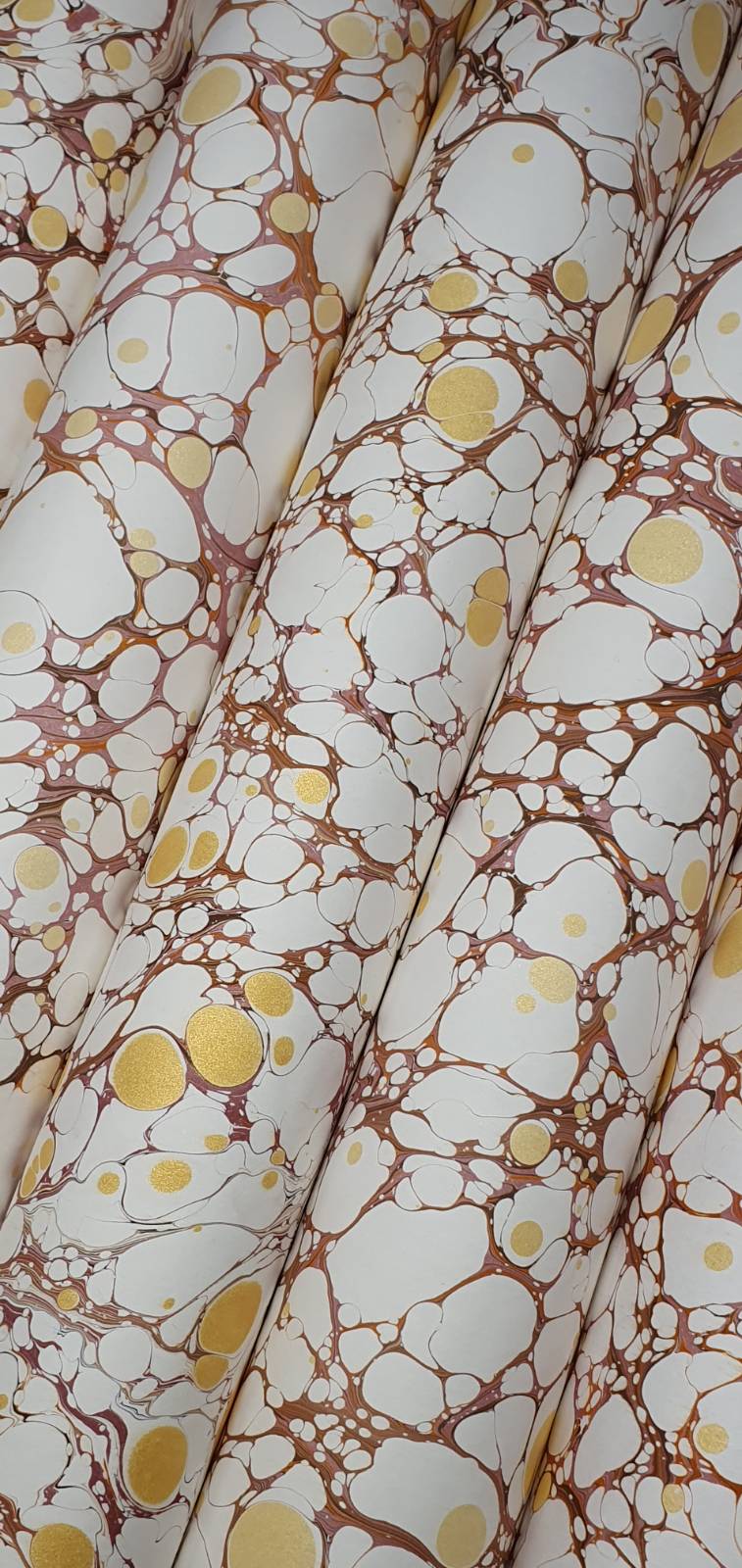
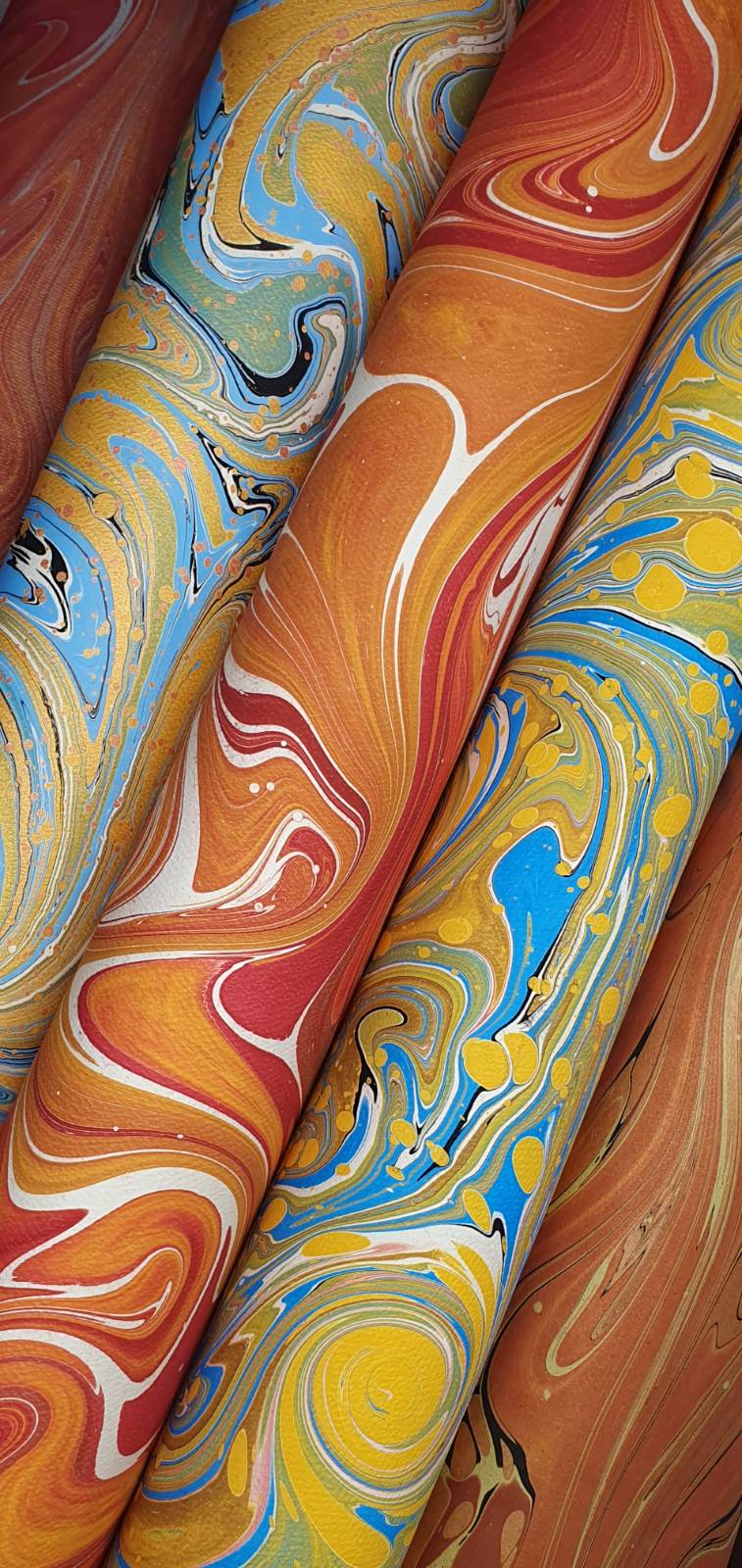
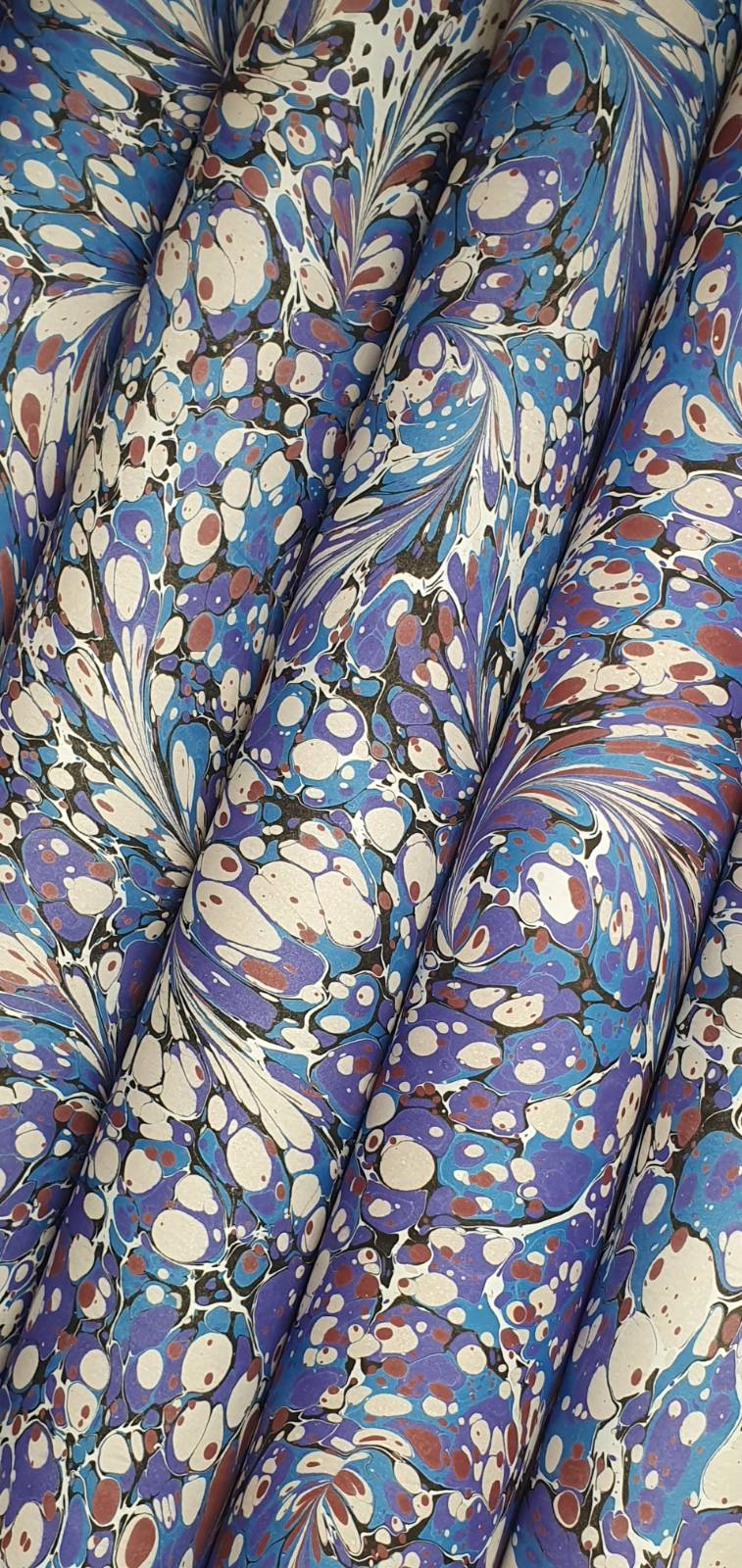
Josef Halfer - Paper Marbling - Introduction.

Photo: Book bound in hand-made marbled paper.
Introduction
"Few people today realize the enormous role that marbled papers played in the everyday life of Europe and the Western world from the late 17th to the late 19th centuries." — Richard Wolfe, Marbled Paper
What is Marbling?
Marbling is the ancient art of applying paints to a thickened water solution and transferring the pattern to paper. The technique relies on understanding the chemistry of pigments, surfactants, and thickening agents. Known in Turkish as ebru, marbling originated in Japan as suminagashi (ink floating), traveled through the Middle East, and reached Europe where it became a fundamental decorating technique for bookbinders.
A Brief History
The craft flourished from the 1600s through the 1900s, decorating the covers and endpapers of thousands of books. Industrial methods and modernization caused the practice to decline in Europe, though it survived among dedicated bookbinders and enthusiasts. Today, marbling is experiencing a renaissance among artists and craftspeople worldwide.
Josef Halfer: The Modern Master
Josef Halfer was a Polish bookbinder with a passion for chemistry. He spent decades researching pigments, thickeners, and pattern techniques, eventually pioneering the use of seaweed-based thickeners (carrageenan) and inventing new patterns recognized throughout European marbling circles.
Dispelling the Myths
In Poland, marbling was often dismissed as impossibly difficult or requiring secret, unobtainable materials. This book aims to dispel these myths and show that anyone with basic supplies—many available at art stores for under 100 PLN—can create beautiful marbled papers.
Purpose of This Edition
This first Polish-language book on marbling makes the craft accessible to a new generation. It combines historical context with practical, modern instructions that emphasize available materials and achievable results.